The Helix® Sling Represents a New Approach to High-Capacity Overhead Lifting
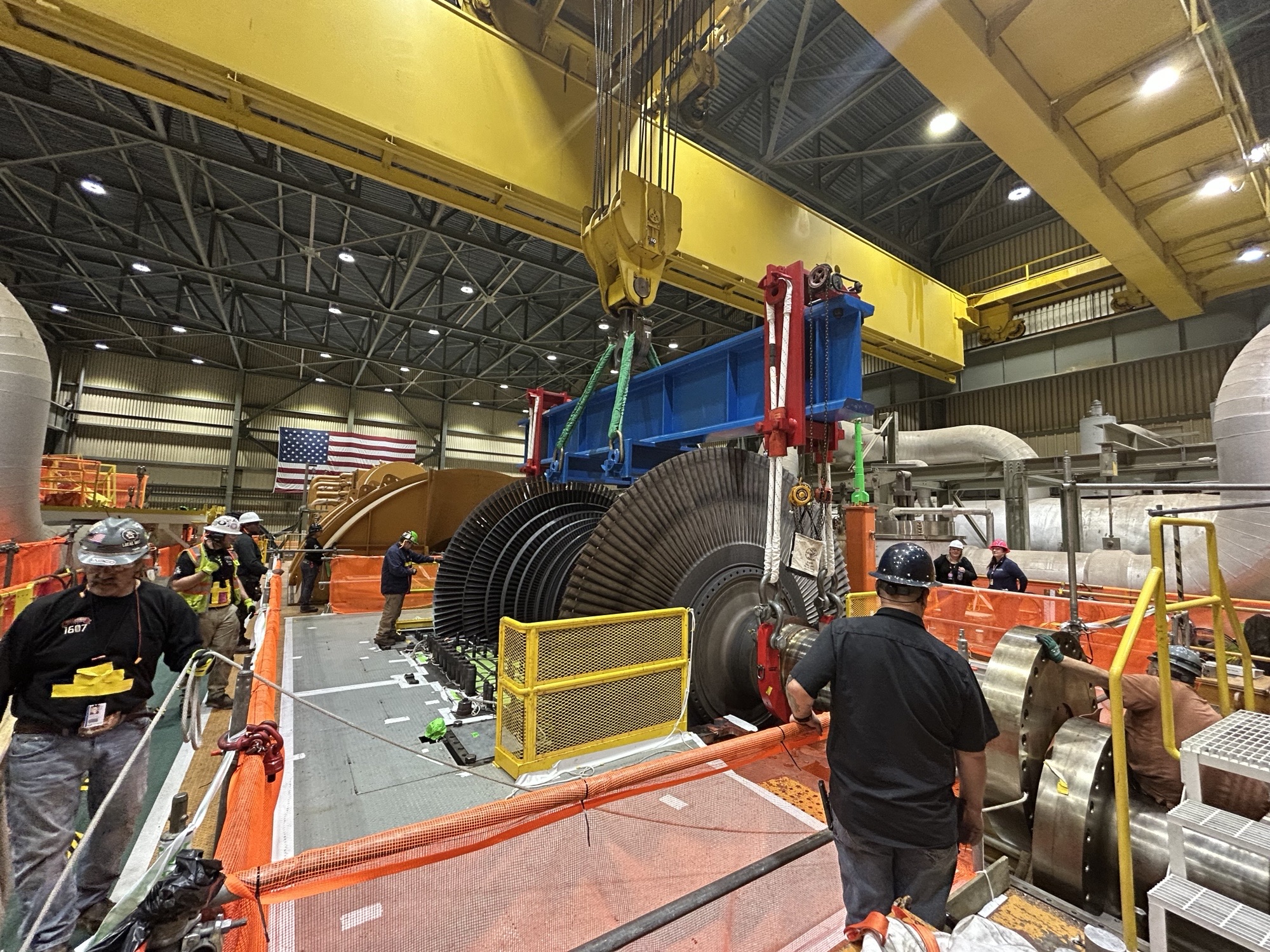
Every experienced rigger has encountered the same frustrating scenario. The lift plan has been reviewed, the crane is in position, and the load is ready to move. Then, as the crew begins making the final rigging connections, it becomes clear that the sling with the required lifting capacity simply won’t fit through the available hardware.
It is a challenge that exists across countless industries. A turbine casing may feature compact trunnions. A fabricated module may have lifting lugs with limited clearance. A spreader beam assembly may leave little room inside the hook once multiple sling legs are connected. In each case, the issue isn’t the working load limit—it’s the physical size of the sling itself.
For decades, the industry has worked around this limitation. Tapered roundslings, wire rope slings, and chain assemblies have all provided practical solutions depending on the application, but each introduces its own compromises in terms of weight, handling, fabrication complexity, or inspection.
The Slingmax® Helix® Sling was developed to challenge the assumption that these compromises were simply part of heavy lifting. Rather than adapting an existing sling design, Slingmax engineers started with a different objective: create a high-performance roundsling capable of delivering exceptional lifting capacity in a naturally compact profile.
The result is a product that has the potential to change how contractors approach restricted lifting points and compact rigging hardware.
Why Capacity and Diameter Have Always Gone Hand in Hand
To understand what makes the Helix Sling different, it helps to understand why traditional roundslings become larger as lifting capacities increase.
A roundsling generates its strength through thousands of load-bearing fibers contained within its protective outer jacket. As working load limits increase, additional core fibers must be incorporated into the sling. More fibers naturally require a larger cross-section, which increases the overall diameter of the sling. For many lifting applications, this relationship between capacity and size presents little concern; however, modern lifting projects continue to push equipment into environments where available space is becoming increasingly limited.
Large industrial components often incorporate compact lifting points to satisfy engineering or manufacturing requirements. Modular construction has created larger prefabricated assemblies with increasingly complex rigging arrangements. Multi-leg bridles frequently require several sling eyes to occupy the same hook or shackle. In these situations, a sling that easily satisfies the required working load limit may simply be too large to use efficiently.
The industry has traditionally responded through tapered sling designs. While tapering has served the industry well, it introduces additional manufacturing complexity and inspection considerations. If a taper is applied too aggressively, it can also limit the ability of the core fibers to spread naturally under load.
Rather than refining the taper, Slingmax engineers chose to rethink the sling itself.
Engineering a Different Kind of Roundsling
The load bearing core of a Helix sling contains Slingmax’s proven K-Spec® Core Yarn, the same proprietary fiber technology that has been trusted for more than 30 years in Twin-Path® and Single-Path® high-performance roundslings. K-Spec has earned its reputation through decades of successful service in some of the world’s most demanding lifting applications, providing exceptional strength while maintaining the lightweight handling characteristics that have become synonymous with high-performance synthetic rigging.
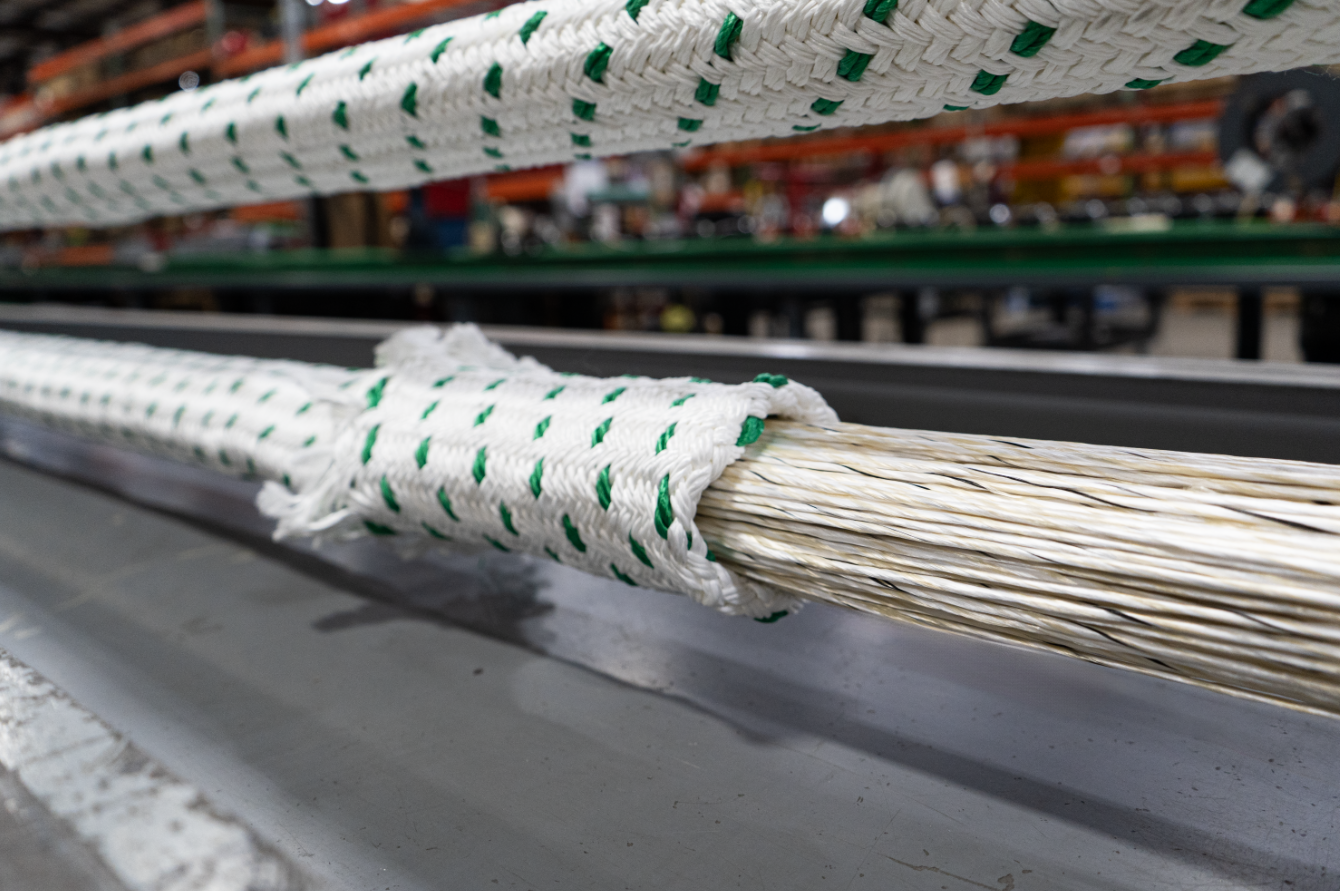
Protecting the core of the sling is a heavy-duty braided HMPE jacket manufactured in the United States. The HMPE jacket provides excellent resistance to abrasion and many industrial chemicals while protecting the load-bearing fibers throughout the sling’s service life.
The defining feature of the Helix Sling, however, is Slingmax’s patented Rifled Cover® Technology. Rather than relying on a conventional jacket design, Rifled Cover Technology is braided directly into the HMPE cover during manufacturing. This process helically twists the fibers as the sling is fabricated, allowing loads to be distributed more efficiently throughout the core. According to Slingmax testing, the technology increases sling strength by approximately 17 percent while simultaneously reducing both sling width and overall weight.
That engineering achievement makes something possible that has historically been very difficult to accomplish: a high-capacity synthetic roundsling with less than half the footprint of an equivalent-capacity Twin-Path® Sling.
Why a Smaller Profile Changes the Entire Lift
It would be easy to assume that the primary advantage of a narrower sling is simply fitting through a smaller opening. In reality, the benefits extend much further. Every inch of space matters once rigging hardware begins coming together beneath a crane hook. A smaller sling profile reduces congestion around shackles, hooks, spreader beams, and multi-leg bridle assemblies. Multiple slings can be positioned more cleanly, improving alignment while reducing bunching around connection points. Riggers spend less time wrestling bulky slings into position.
Weight reduction is equally important. Compared to wire rope slings or polyester roundslings of similar capacity, the Helix Sling significantly reduces the amount of weight crews must carry, position, and connect throughout the workday. While lifting capacity may be measured in tons, rigging efficiency is often measured in minutes and those minutes accumulate quickly over hundreds of lifts.
The reduced profile also opens the door to applications traditionally dominated by wire rope. Because the Helix Sling offers a diameter comparable to wire rope in many lifting configurations, contractors now have a high-performance synthetic option where conventional roundslings may have previously been impractical.
Wire rope remains an excellent lifting solution in many environments, but Helix expands the range of applications where synthetic rigging can now be considered.
Putting the Design to Work
Innovative engineering is only meaningful if it performs outside the lab. Recognizing this, Slingmax conducted an extensive beta evaluation with customers representing manufacturing, heavy construction, and crane and rigging operations before introducing the Helix Sling to the market.
At a large manufacturing facility, Helix Slings were used to lift custom shipping skids carrying nose cone sections designed for space flight weighing between 50,000 and 60,000 pounds. Configured in four-leg bridles and used approximately twice each day, the slings completed dozens of lifts during the evaluation period. Operators immediately commented on the reduced weight compared to both chain assemblies and traditional Twin-Path® Slings, while also noting how easily the slings fit within the lifting hardware. Following repeated use, no sling damage was reported.
AA Transfer, a crane and rigging contractor specializing in modular equipment handling, placed Helix Slings into regular service unloading and loading generators with spreader bars. After months of use, crews reported no durability concerns while consistently highlighting three characteristics that distinguished the product from their existing rigging inventory: its lighter weight, smaller dimensions, and ease of handling. The slings were used exactly as conventional polyester roundslings had been used previously, but with significantly less bulk.
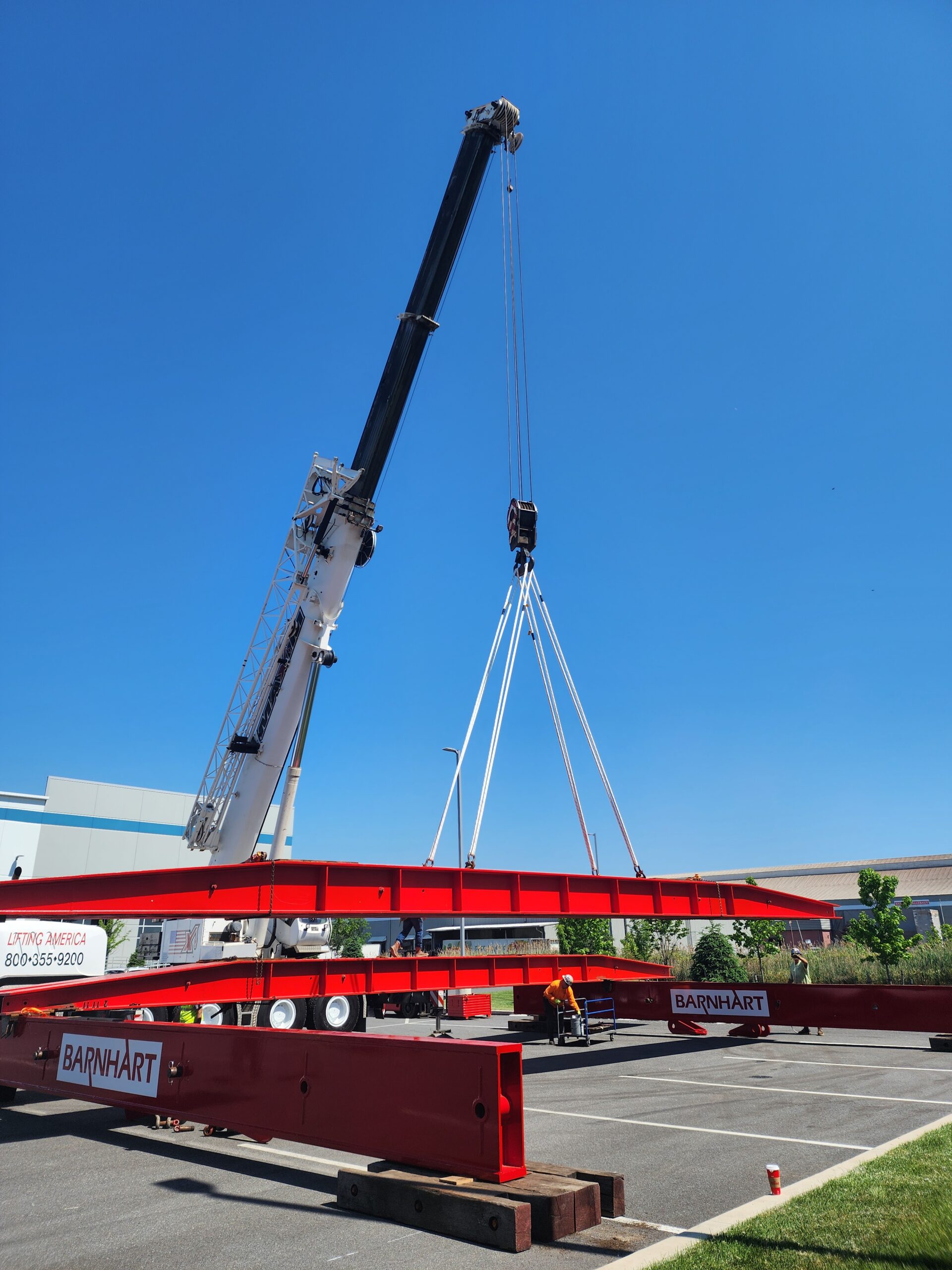
Barnhart/Hake evaluated the Helix Sling during crane preassembly and mechanical equipment lifts on a major project in Philadelphia. Following more than twenty-five heavy lifts, crews praised the compact profile, lightweight construction, and ease with which the slings fit into hooks and shackles without bunching. One observation stood out in particular: when manually rigging equipment more than twenty stories above the ground, every unnecessary pound becomes noticeable. By reducing rigging weight without sacrificing lifting capacity, the Helix Sling made an already demanding job easier.
Perhaps the strongest endorsement came from the crews themselves: “The crew absolutely loved the Helix Slings. They fit perfectly in hooks, sister hooks and shackles with no bunching, and their lightweight design made them easier to work with and easier to store.”
For Slingmax engineers, those comments represented more than customer satisfaction. They demonstrated that the product had successfully addressed the challenges it was originally designed to solve.
Looking Ahead
Innovation in the lifting industry is often associated with higher capacities, stronger materials, or larger equipment. The Helix Sling represents a different kind of innovation. Rather than asking how much more a sling can lift, Slingmax asked how a sling could work better in the real-world environments where lifting professionals operate every day.
By combining decades of proven K-Spec® Core Yarn technology with a braided HMPE jacket and patented Rifled Cover® Technology, Slingmax has developed a high-performance roundsling that occupies significantly less space while maintaining the strength, durability, and reliability expected of premium lifting equipment.
For contractors working around restricted hardware, narrow trunnions, crowded crane hooks, or confined lifting points, that smaller profile can eliminate compromises that have existed for decades.
Sometimes the most meaningful innovation isn’t measured by lifting more weight. Sometimes it’s measured by making the lift possible in the first place.